
getting buzzed —
Native pollinators are elementary for each and each ecology and agriculture.
–
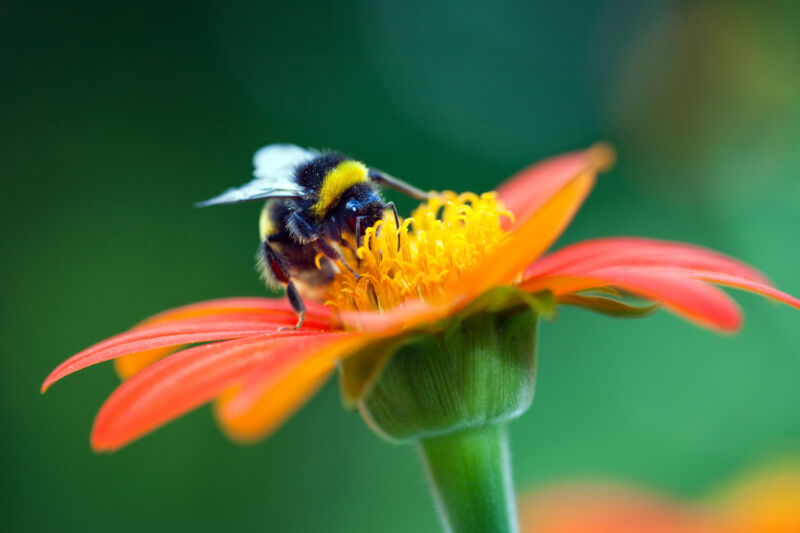
Amplify / The black and golden bumblebee, Bombus auricomus, is generally stumbled on in grasslands throughout the Huge Plains and japanese states.
When ecologist Rachael Winfree first started finding out bees 25 years throughout the previous, she happened upon a shock: a species of plasterer bee throughout the New Jersey Pine Barrens, not thought-about in 50 years and suspected to like gone extinct. Nonetheless when she referred to as suppose pure world officers to painting the invention, she was once suggested they weren’t —they didn’t just like the sources to visible present unit bees and different bugs.
This can be a neatly-known notify to scientists who look for native bees. These bugs are going via a number of threats, and although reputable monitoring has improved, their declines like not been neatly documented. On the equivalent time, a rising physique of analysis is revealing factual how elementary native bees are as pollinators for many crops. “They each pollinate our pure packages and—what of us don’t hint—they’re furthermore actually elementary for many of our agricultural crops,” says Scott Dim, govt director of the Xerces Society, a nonprofit targeted on invertebrate conservation.
Residence honeybees are comely noteworthy synonymous with pollination inside most people’s thoughts, specifically in phrases of crops, and the spot of untamed bees has largely been overshadowed by peril about threats to the home type. Many folks don’t know the variation between wild and home bees, further obscuring each the troubles confronted by many wild species and their bear in mind, says Hollis Woodard, an entomologist on the School of California, Riverside.
Whereas specific particular person home honeybee colonies are at risk of harm down because of a mixture of downhearted weight loss plan, pesticides, and pathogens, the bugs should not at risk of dying out. “We set up honeybees all internationally,” Dim says. “There are extra honeybees throughout the area now, we deem, than ever throughout the previous.”
For some wild bees, then once more, the threats could be existential. And this isn’t inferior information factual for the bees. Researchers argue that relying utterly on honeybees for pollination is a unstable technique corresponding to a downhearted retirement technique of shopping for shares in handiest one agency. And analysis like confirmed that native bees are in fairly numerous circumstances elementary to flourishing ecosystems and farms, even the place honeybees are noteworthy.
Rising consciousness of the notify is prompting each scientists and policymakers to pay larger consideration to declines amongst these principal bugs. And up to date findings level to how farmers and land managers can higher pork up a numerous and booming bee neighborhood.
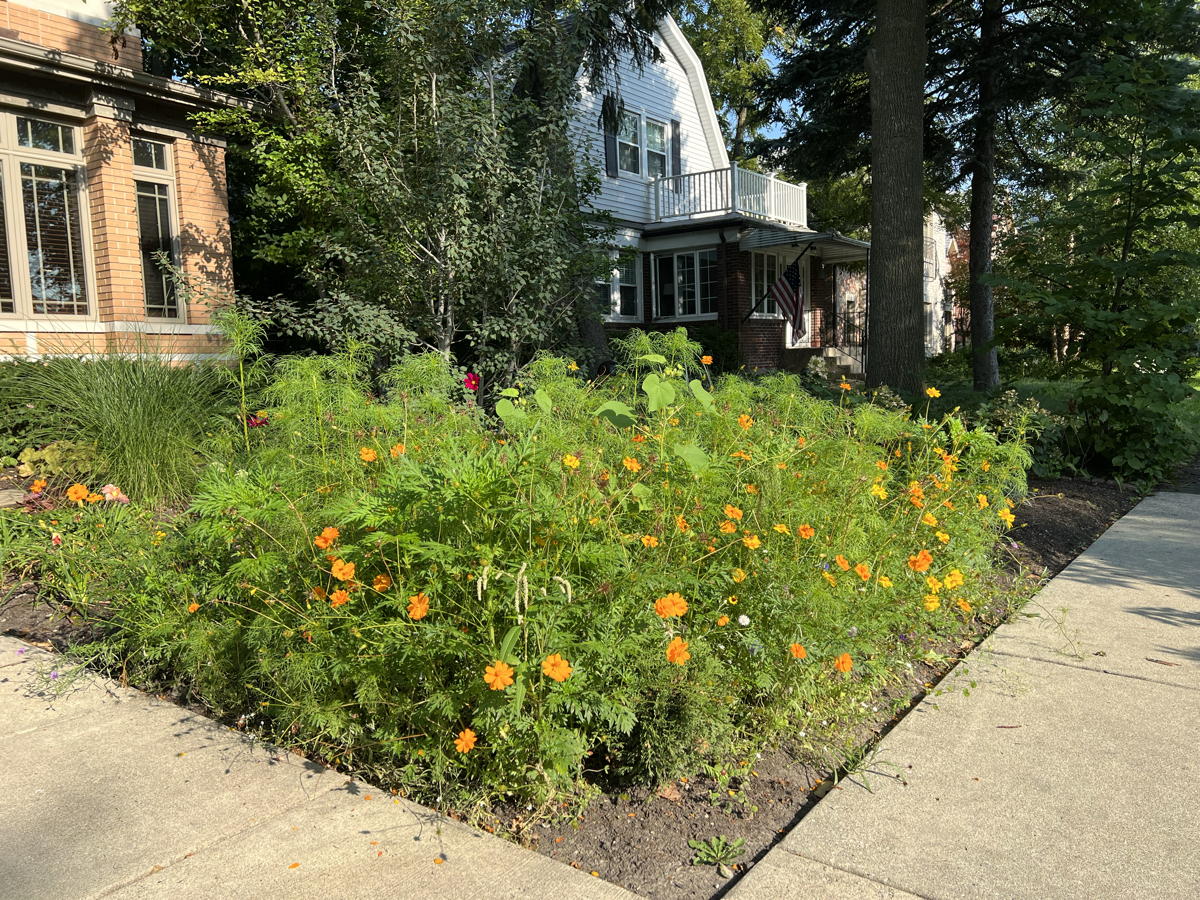
Amplify / A entrance garden planted with wildflowers in Illinois. Folks can discount imperiled native bees by landscaping with pollinator-pleasant crops.
Ars Technica
Benefits of bees
Now not like hive-forming honeybees, most wild species are solitary (bumblebees, which salvage colonies, are one neatly-identified exception), nesting in cavities in rocks and wooden or on the bottom in leaves and woody particles. There are about 20,000 wild bee species globally and three,600 inside the US and Canada.
Greater than 80 p.c of flowering crops rely on insect pollinators to breed. When pollinators search the suggestion of with flowers—which act as a result of the crops’ reproductive organs—to eat their nutritious pollen and nectar, the bugs inadvertently transport the pollen between crops, which fertilizes the blooms, essential to fruit and seed formation. “In say for you resilient meadows in Colorado’s mountains, in say for you attractive good grass prairie throughout the east, or flowering ecosystems in California, you’ll per likelihood thank a neighborhood bee,” Dim says.
In agricultural fields spherical the sector, native bees discount to pollinate the three-quarters of prick species that rely on pollinators, which quantities to 1-third of worldwide prick manufacturing by amount. (Many staples savor wheat and corn are wind-pollinated.) In a 2013 look for conserving 27 sorts of crops—corresponding to almonds, espresso, and blueberries—all of the plan by which via 600 fields spherical the sector, researchers stumbled on that wild bugs elevated the speed at which flowers flip to fruit. Fields with fewer wild pollinators had much less fruit, essential the authors to complete that honeybee pollination on my own may per likelihood not be able to retain most yields on farms.

Many crops are depending on pollination by bugs together with native bees.
Modern work has furthermore highlighted the large monetary affect of untamed bees. Evaluation printed in 2020 stumbled on that for seven crops, together with apples and pumpkins, wild bees had been in affirm of over $1.5 billion in annual manufacturing. Wild and managed bees like related contributions to the worth of accomplish bought, basically primarily based solely on a 2015 analysis of 20 crops all of the plan by which via virtually 1,400 fields.
For some crops, wild bees are extra excellent pollinators than honeybees. For instance, in tomatoes, blueberries, and cranberries, bumblebees are paramount. These crops’ flowers want to be shaken with a correct frequency to begin pollen. “That frequency is equipped by the bees’ buzz,” says entomologist Sydney Cameron of the School of Illinois Urbana-Champaign, coauthor of a 2020 overview of traits in bumblebee neatly being throughout the Annual Analysis of Entomology. The fuzzy bugs land on flowers and isolate their flight muscle teams from their wings, permitting the muscle teams to vibrate their thorax as their wings protect collected, making them by far mainly probably the greatest pollinators for these crops.
Even recurring pollinators can play an extremely severe attribute. In a 2022 look for of 72 wildflower and agricultural websites in New Jersey and Pennsylvania, uncommon and declining bee species outfitted as much as 86 p.c of pollination at some areas. Uncommon pollinators assist as insurance coverage, filling in when fashionable species are absent, says Winfree, now a pollination ecologist at Rutgers School and coauthor of the analysis. “In some locations or some instances, you’ll per likelihood not like that dominant bumblebee or that honeybee,” Winfree says. “You may per likelihood per likelihood want these different species.” For instance, when extreme winds in California almond orchards drove honeybees to protect of their hives, wild bees endured to look the suggestion of with the timber.
Nonetheless the final benefits outfitted by native bees could be at risk, says Claire Kremen, a conservation biologist on the School of British Columbia. In an abstract of virtually about half of of all bumblebee species, scientists estimated that a 3rd of those studied had been in decline. The totally different of bee species documented in a yearly scrutinize from 2006 to 2015 had dropped by a fourth when put subsequent to related tallies sooner than 1990. Some crops—together with apples, blueberries, and cherries throughout the US—are already being affected by the declines, producing much less fruit than they’d be anticipated to with extra pollinators.